Friday, November 27, 2026

What Will Stick With Me

1. Shifting the Paradigm

One of the biggest things that will stick with me is the importance of using an asset-based approach when working with students. Instead of focusing on what a student struggles with or what they may be missing, teachers should recognize their strengths, interests, and individual abilities. In this reading, I loved the idea of identifying a student's “jewels” and using those aspects as the foundation for their learning journey. Focusing on students as a whole and nurturing all of the potential they have is something that really stood out to me about this article. When a school environment encourages and incorporates a student's interests and strengths, it creates a more meaningful and engaging learning experience.

2. TroubleMakers

Something else that stuck with me was the idea that students should not be expected to sit quietly, follow directions, and learn only from their teachers. I think we get so used to this being the reality of classroom expectations that we have never really questioned it enough. I really liked the reminder that students have their own thoughts, opinions, questions, and experiences that deserve to be heard and incorporated into our teaching. I want my classroom to be a place where students feel comfortable speaking up, collaborating, making mistakes, and learning from one another instead of feeling like being a good student means being quiet and obedient. I also think this connects to a bigger idea about what education should actually look like. Learning should not just be about remembering information long enough to pass a test. It should be about developing problem-solving skills, thinking independently, and being able to form your own opinions. We should want students to leave our classrooms with knowledge they can actually apply to the world around them.

3. Neurodiversity

I also had to include the reading about neurodiversity. The idea that there is no single "correct" way for someone's brain to work is something I think every future educator should understand. Students are not all going to learn, communicate, or process information in the same way, and I think it is our responsibility to recognize those differences without making students feel singled out or less capable because of them. Like the article explains, everyone's brain functions and works differently, and there isn't one right way to think, learn, or understand things. A lot of the time, people compare others to what society considers “normal” instead of simply accepting everyone's differences. As teachers, we should accept every student for who they are and teach them accordingly. This was an especially important reading for me because I hope to work in special education, and I think understanding and embracing neurodiversity is such an important part of creating an inclusive classroom.


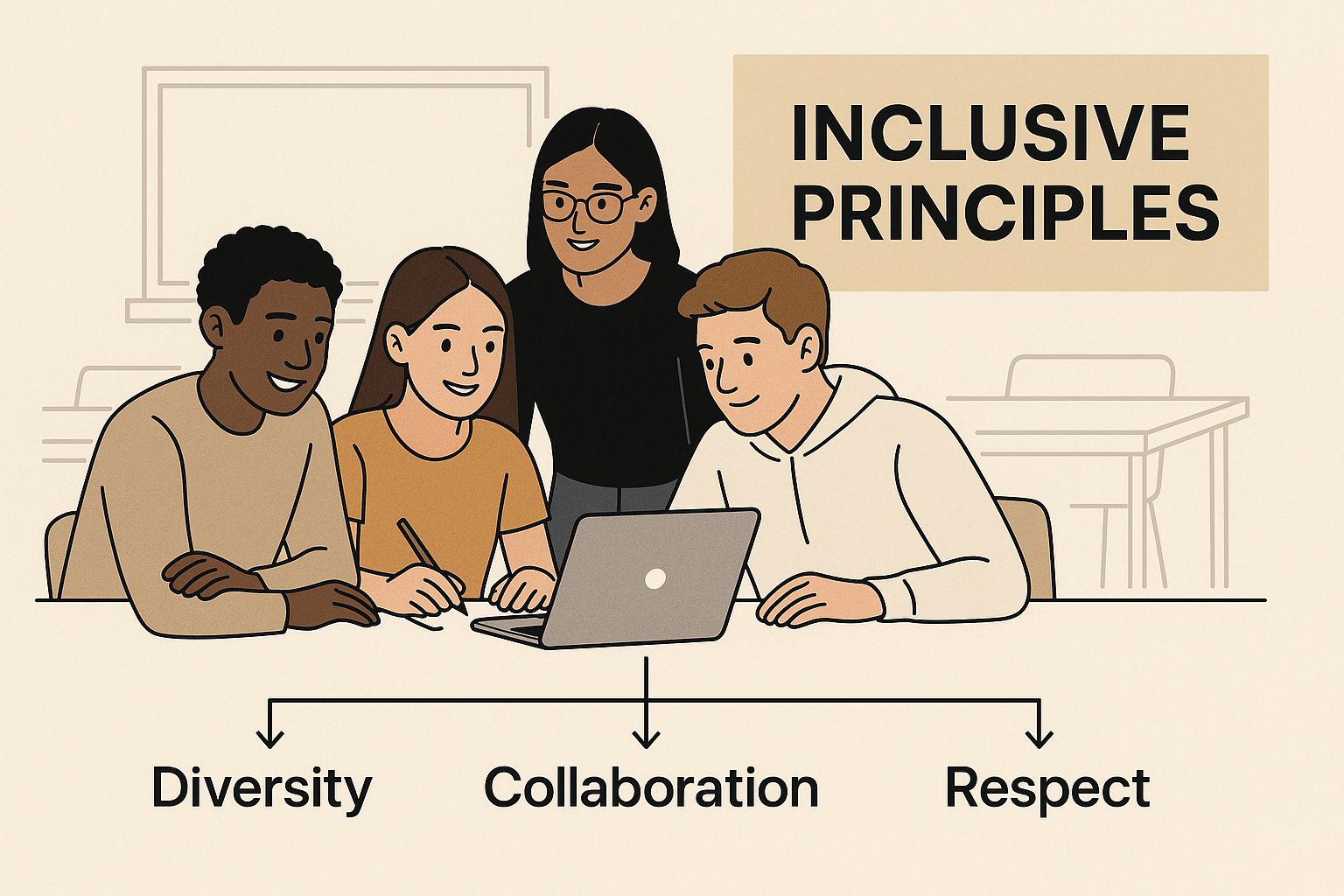
7 Tips for Fostering Inclusion in the Classroom - Keshet


Saturday, November 14, 2026

RI Gender in Schools & Transgender Nondiscrimination Policy

Connection

Both readings this week connect through the importance of creating safe, welcoming, and inclusive school environments for transgender students. RIDE focuses on explaining why schools need to protect students from discrimination and how we can support these students regardless of gender identity. The Providence Public School District policy explains the steps schools should follow to make sure students are treated fairly and respectfully.

One major theme between the readings is the importance of student privacy. Both texts really explain the importance of respecting students' names, pronouns, and identities. They discuss how schools should work with students to understand how they want to be addressed and create a supportive plan. It is also stated that students have the right to use a name and pronouns that match their gender identity, even if they have not legally changed their name. 

As a future educator, these readings help us understand that creating a welcoming and inclusive classroom means more than simply treating everyone equally. It means recognizing that students have different experiences and needs, and we need to make sure everyone feels comfortable being themselves. Teachers play an important role in setting the tone for their classrooms, and it is our responsibility to make sure no student feels excluded, embarrassed, or unsafe. 

Reflection & Questions

One point I would like to bring up in class is how important it is for teachers to understand school policies surrounding gender identity and student privacy before situations arise. I wonder how much training teachers actually receive on these topics and whether they feel prepared to handle conversations with students and families. 

Guide to Being an Ally to Transgender and Nonbinary Young People

RIDE Releases the RI Pre-K Application for 2021-2022! - Center for Early  Learning Professionals


I did not use AI for my blog post.

Saturday, November 7, 2026

Preface + Introduction - TroubleMakers

Quotes

"By and large, these are not the schools we have now. For the most part, schools value quiet children over loud ones and operate as though adults are the only teachers in the room."

I think it is easy to forget that students contribute as much to a classroom as teachers do. Being a good student shouldn’t mean sitting quietly, never asking questions, or only speaking when called on. Kids should feel comfortable asking questions, sharing curiosity, stating their opinions, and even disagreeing with one another sometimes. Obviously, respectfully. I think some of the best learning happens when students are actually talking, collaborating, and learning from each other's perspectives. Everyone grows up differently and in different homes. That should show through the classroom. 

"Young people are taught academic content that can be drilled and tested rather than understanding literacies and numeracies as forms of power, tools for organizing, fodder for the development of their own original ideas."

Education has become so focused on grades, testing, and memorization that we sometimes lose sight of the bigger picture. Students need to understand why they are learning something and how they can actually use it in their lives and why it is important to know now. I don't think learning should just be about remembering information long enough to pass a test. It should be about developing problem-solving skills, thinking independently, and being able to form your own opinions. We should want students to leave our classrooms with knowledge they can actually apply to the world around them.

"Kids learn the culture of school quickly. In a second-grade classroom I visited, children were tasked with drawing illustrations to accompany newly acquired vocabulary. For the word obedience, where I expected a picture of a dog, perhaps, I instead found a young artist who had drawn a row of pupils at their desks sitting straight, hands clasped, facing forward. It was a haunting image and, also, a deeply resonant one."

I think this is an interesting quote because it shows how quickly kids pick up on things even if we don't realize it. This made me think about what students are actually learning from a classroom environment. Are we teaching them to be curious/independent, or are we teaching them that being a good student means sitting still, following directions, and not asking questions? Obviously, structure and expectations are important, but I don't think we should confuse being respectful with being obedient all the time. Kids should have their own personalities, be able to speak up, and feel comfortable making mistakes without feeling like they are doing something wrong.

Questions & Reflections

How can we achieve this in our classrooms without letting go of classroom expectations and structure? What is the perfect balance of both? I think it is hard to imagine because we are used to the classroom described in the example. 


https://uniweb.uottawa.ca/sites/315/Pros%20and%20Cons


I did not use AI for my blog post.


Wednesday, November 4, 2026

What Is Neurodiversity? - Caroline Miller

 “There is natural variation in how people’s brains work, with no single ‘correct’ way.”

This quote explained the idea behind neurodiversity in a really simple way. Like the article says, everyone’s brain works differently, and there isn’t a right way to think, learn, or understand things. A lot of the time, people compare others to what society considers “normal” instead of just accepting everyone's differences.

“Instead of thinking of people with autism or ADHD as needing to be ‘fixed,’ we put a spotlight on things that they’re good at and help with things that they’re working on.”

I have read some things that have been similar to this quote in other articles, and it always stands out to me because it is really important to focus on a person's strengths rather than only focusing on what they struggle with. It helps prove that having a learning disability does not mean someone is less capable. This is especially important in schools because teachers need to be able to encourage and uplift students and recognize what they are good at, instead of making them feel different/behind.

“Neurodiversity has also evolved from a focus on individuals with a formal diagnosis of autism, ADHD or a learning disorder to include a broader group of people, many of whom self-identify as neurodiverse.”

The understanding of neurodiversity has really expanded beyond diagnoses or disorders. It recognizes that people can experience differences in how they think, learn, and process information without having a diagnosis. I think this is important because it shows that neurodiversity is not limited and that everyone's experiences and differences deserve respect. It also helps remove any stigma around the word and almost makes it more “casual”. 

Reflection & Questions

I think people are too quick to focus on someone else's struggles instead of seeing what they have to offer. In schools, students are often expected to learn and behave in similar ways even though everyone has different needs. Teachers have a responsibility to create an environment where all students feel accepted and supported. 

How can teachers make sure neurodivergent students feel included and supported without making them feel singled out or different from their classmates?


Creating a Welcoming Classroom | Edutopia


I did not use AI for this blog post.

Sunday, October 18, 2026

Introduction to Culturally Relevant Pedagogy & What to Look for in a Classroom - Alfie Kohn

Connection

The video, Introduction to Culturally Relevant Pedagogy, and Alfie Kohn’s article “What to Look for in a Classroom” connect through the idea that students should be active in their own learning. Both challenge the traditional view that teachers should simply deliver information while students sit quietly and follow directions. There is an emphasis on creating classrooms that respond to students’ needs, encourage participation, and make learning a lot more meaningful.

The video explains the importance of connecting classroom learning to students’ cultural backgrounds and everyday experiences. Students bring different perspectives, knowledge, and experiences into the classroom, and teachers should recognize these as valuable parts of the learning process. This connects to Kohn’s article, which describes classrooms where students’ interests and questions help shape learning. Kohn emphasizes that teachers should work with students rather than simply making decisions for them. 

These readings made me think about how classroom success is measured. A classroom where everyone is quiet and completing assignments might look good, but that doesn't necessarily mean students are engaged or feel included. A stronger learning environment makes students more comfortable asking questions, making connections, collaborating, and sharing their thinking. As a future educator, I want to create a classroom where students feel comfortable expressing themselves and where lessons connect to their lives. I recognize that this requires more than choosing diverse books or activities; it means consistently listening to students and considering their needs when planning instruction.

Question

How can teachers balance curriculum requirements with giving students meaningful choices and incorporating their cultural backgrounds into lessons?

Download Classroom Peaceful View Image - Classroom, Window, Teacher |  StockCake


I did not use AI for this blog post.

Tuesday, October 6, 2026

The Silenced Dialogue: Power and Pedagogy in Educating Other People’s Children - Lisa Delpit

Reflection

    Something I took away from this reading is understanding the importance of valuing students' different cultures and experiences. Delpit explains that schools and classrooms are influenced by a “culture of power,” meaning that certain ways of speaking, behaving, and learning are often treated as the standard. This made me think about how important it is for teachers to recognize that students may come into the classroom with different backgrounds, experiences, and ways of communicating. I want to create a classroom where students feel like their cultures and different experiences are valued while also teaching them the content and skills they need.

    I also realized while reading that listening to different teachers and their perspectives is so important. Delpit says that ideas and experiences of educators of color have sometimes been overlooked when decisions are made. This made me think about how teachers can have very different perspectives based on their own experiences and the students they work with. A teacher who has a different background or has worked with a certain group of students may have ideas that others would not have considered. Listening to those many perspectives can help all teachers become more effective and make better decisions for their students.

Comments

    Delpit made me think about how teachers can unintentionally decide what is “normal” in a classroom. I think listening to students and teachers can help us recognize our assumptions, and then we can create a classroom that is more inclusive.

What is an Inclusive Education? A Complete Guide - Queen's Online School

I did not use AI for this blog post.

Wednesday, September 30, 2026

The Academic and Social Value of Ethnic Studies - Christine E. Sleeter

Extended Comments

    After reading “The Academic and Social Value of Ethnic Studies”, written by Christine Sleeter, I went through the reading one more time, skimmed it, and wrote down some notes about what I thought while reading and any connections I made. Then, I scrolled through some blogs that my classmates wrote. When I read Dhara’s blog, I found it interesting that she was able to connect this to our other readings.

    Dhara’s connection between Christine Sleeter’s “The Academic and Social Value of Ethnic Studies" and Allan G. Johnson’s “Privilege, Power, and Difference” is very relevant. When I thought about it, I also found it interesting how both readings state that inequality exists within larger systems. Like Dhara mentioned, school curriculums normally focus on White and Euro-American perspectives, while other racial and ethnic groups are often left out or only briefly mentioned. Sleeter explains that adding information about different groups does not change the overall way history and other subjects are being taught. I think this is important because students should be able to see their own cultures being represented. 

https://drive.google.com/file/d/1uMSd-j8Uqvm3T0HW0EdUoUUpXNSvE2zZ/view

5 Reasons Ethnic Studies Can be Life-Changing – Infographic - IDRA

    Dhara’s question about how teachers can make their curriculum more representative is something I think is really important to consider. I think that maybe one step could be including books, historical figures, and authors from a variety of racial and cultural backgrounds throughout the entire school year, rather than just specific months or holidays. Her question also connects to Sleeter’s argument that ethnic studies should be more than simply adding a few diverse topics to an existing curriculum. 

Questions & Comments

Like Dhara’s question: how do YOU think teachers should include different cultures and perspectives in their curriculum in a way that feels meaningful/fully integrated, rather than just adding them to the already existing curriculum? After reading, I have mainly been thinking about how a more culturally inclusive curriculum can affect the way students view themselves, their classmates, and their education as a whole. 

I did not use AI for this blog post.


What Will Stick With Me

1. Shifting the Paradigm One of the biggest things that will stick with me is the importance of using an asset-based approach when working w...