Wednesday, September 30, 2026

The Academic and Social Value of Ethnic Studies - Christine E. Sleeter

Extended Comments

    After reading “The Academic and Social Value of Ethnic Studies”, written by Christine Sleeter, I went through the reading one more time, skimmed it, and wrote down some notes about what I thought while reading and any connections I made. Then, I scrolled through some blogs that my classmates wrote. When I read Dhara’s blog, I found it interesting that she was able to connect this to our other readings.

    Dhara’s connection between Christine Sleeter’s “The Academic and Social Value of Ethnic Studies" and Allan G. Johnson’s “Privilege, Power, and Difference” is very relevant. When I thought about it, I also found it interesting how both readings state that inequality exists within larger systems. Like Dhara mentioned, school curriculums normally focus on White and Euro-American perspectives, while other racial and ethnic groups are often left out or only briefly mentioned. Sleeter explains that adding information about different groups does not change the overall way history and other subjects are being taught. I think this is important because students should be able to see their own cultures being represented. 

https://drive.google.com/file/d/1uMSd-j8Uqvm3T0HW0EdUoUUpXNSvE2zZ/view

5 Reasons Ethnic Studies Can be Life-Changing – Infographic - IDRA

    Dhara’s question about how teachers can make their curriculum more representative is something I think is really important to consider. I think that maybe one step could be including books, historical figures, and authors from a variety of racial and cultural backgrounds throughout the entire school year, rather than just specific months or holidays. Her question also connects to Sleeter’s argument that ethnic studies should be more than simply adding a few diverse topics to an existing curriculum. 

Questions & Comments

Like Dhara’s question: how do YOU think teachers should include different cultures and perspectives in their curriculum in a way that feels meaningful/fully integrated, rather than just adding them to the already existing curriculum? After reading, I have mainly been thinking about how a more culturally inclusive curriculum can affect the way students view themselves, their classmates, and their education as a whole. 

I did not use AI for this blog post.


Saturday, September 19, 2026

Shifting the Paradigm - Renkly & Bertolini


Reflection

    After this reading, I reflected on my own education, what I have experienced in school, and also what I have witnessed. I have seen both deficit-based and asset-based approaches. I have been in classrooms that prioritized a student’s strengths, skills, and resources. In my experience, these have been my English classes. When these qualities are valued, as a student, you feel more motivated and more confident in your ability to succeed in that class. In classrooms that focus on what you don’t know, what is missing, and what you lack, you often feel defeated or have lower expectations for yourself. 

    Identifying a student's “jewels” (skills, talents, and interests) and using those aspects as the foundation for their learning journey is much more motivating. The asset-based models are focused on seeing a student as a whole and nurturing all of the potential they have. When a school environment encourages and integrates a student's interests and strengths, it creates a more meaningful and engaging experience for students.  

    What really resonated with me is the emphasis on positive adult relationships and community connections. When a kid feels supported by the adults around them, they are more likely to take risks and bounce back from failures. Building confidence and resilience, especially in the first few years of a student's education, sets students up for success and helps them approach school positively. 


https://edugals.com/asset-vs-deficit-mindset-e080/


Thoughts & Questions

    A lot of schools and classrooms focus on a more negative side of things. Instead, teachers should be praising students for what they are excelling in and focus on the areas of growth. However, I am curious how teachers maintain that approach when having to address a student who is having a difficult time with certain content. Would this be considered using both approaches in the classroom?


I did not use AI for this blog post.

Sunday, September 13, 2026

What Counts as Education Policy - Jean Anyon


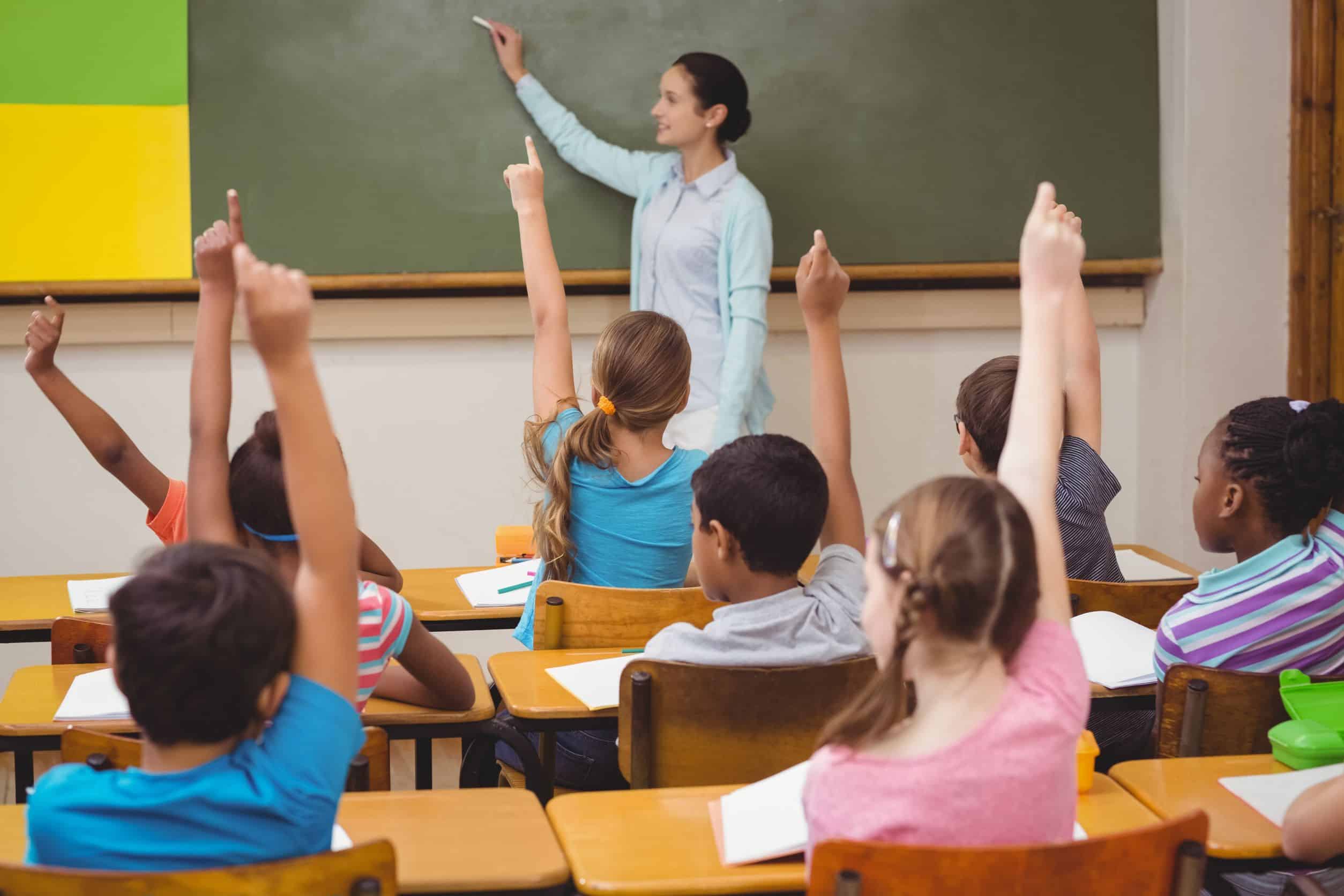
Keys to Effective Classroom Management - Graduate Programs for Educators


Quotes


“A recent national study of young children confirms the potential of impoverished circumstances to prevent students' full cognitive growth before they enroll in kindergarten. Of countervailing power, however, is research demonstrating that when parents obtain better financial resources or better living conditions, the educational achievement of the children typically improves significantly. These findings empirically support the argument that for the urban poor, even with the right educational policies in place, school achievement may await a family's economic access.”


This quote explains that a child's development is shaped before they even begin kindergarten. Obviously, financial resources and living conditions play a huge role in a child's life. Systemic issues related to poverty and inequality can create these barriers in education. As teachers, it's crucial we recognize our students' backgrounds. As educators, we should also advocate for policies that improve economic access for families.


“Income allows parents to provide their children with safer, more stimulating home environments; to live in communities with better schools, parks, and libraries and more challenging peers; to afford tuition and other expenses associated with higher education; to purchase or otherwise gain access to higher-quality health care; and in many other ways to buy the things that promote the health and development of their children"


Money can be an entry to so many different things. This includes better housing, safer neighborhoods, good healthcare, and the basic things that every child should have access to. Income can help provide the ways that begin to foster a child's growth and learning. A child coming from a home with access to books and different educational toys will likely have a strong foundational knowledge when entering kindergarten. I think a lot of people dismiss these facts and do not truly realize how much a child's home life affects their ability to learn and grow.


 "Economic pressure has been found to be associated with depression (and stress) in parents, which can affect parenting, and thus school achievement.”


When people are living paycheck to paycheck, or are unsure of how they are going to pay their bills, there becomes a huge stressor in their lives, and it is something that requires constant attention. When a parent is in a state of worry or stress, children pick up on it, and they can sense any shift in mood. This can affect a child's home life in so many ways. Sometimes, without even realizing it, this can shape a student's view on school and education altogether. 


5 Concrete Ways to Help Students Living in Poverty


Question


What can teachers do for students who are negatively affected in this way? How can we support them and their families in a way that's appropriate and not an overstep?


I did not use AI for this blog post.


Friday, September 4, 2026

The Broken Model & A Short History of Public Schooling

Every student has potential. Not every system helps them find it. For too  long, education has been built around the idea that everyone should learn  the same way, at the same pace,

The Broken Model
Sal Khan

A Short History of Public Schooling


Reflection


While watching the History of Public Schooling video, I found the discussion of the 1852 compulsory attendance law intriguing. It made me reconsider how children would learn before that law was put into place. I had never really thought about how class determined a child's education and the content they were learning. Kids learned at school, at home, or through tutors, but because attendance was not required before 1852, families decided what values and knowledge they wanted to instill in their children. 


While reading “The Broken Model” by Sal Khan, I was encouraged to think more deeply about school, education, and the structure of it all. I enjoyed his view on school subjects and his idea that they should flow into one another instead of being split up and taught separately. This is something that I would like to incorporate in my classroom. I want students to use different skill sets and learn how to put everything they know together. I think this would be really beneficial in a self-contained classroom. Some students may struggle with certain concepts, but helping them activate other knowledge to put main ideas together can help them understand the bigger picture. 


In the chapter “Tests and Testing,” I specifically liked the quote, “Tests say little or nothing about a student's potential to learn a subject.” The author continued by saying that students learn at varying rates and some catch on faster than other students. This is something important to keep in mind when we have classrooms of our own. Students are capable of learning the content of what is being taught; they may just need extra support or more time to work through it. As teachers, it is our job to help students reach their full potential.


Questions


How can we help students connect prior knowledge and activate different skill sets to understand new concepts? What about in a self-contained classroom?


https://www.americanboard.org/blog/11-facts-about-the-history-of-education-in-america/


I did not use AI for this blog post.


Tuesday, September 1, 2026

Privilege Power and Difference - Allan G. Johnson


Quotes

"‘Can't we all just get along?’ His words formed a simple yet eloquent summary of the current state of our racial dilemma, what the black leader and scholar W. E. B. Du Bois called a century ago ‘the problem of the color line.’ But in King's few words, he said more than that. Past his exasperation lies a real and serious question, one that has haunted us ever since the Civil War brought down the institution of slavery. Like any serious question, it sits and waits for what it deserves, which is a serious answer.”

This seemingly short and simple question, asked by Rodney King, a black man who was beaten by police, is rather deep and requires serious consideration. The author, Allan G. Johnson, suggests that these systemic issues have continued. Even after all of this time, racism and discrimination show up frequently within our country. The more I think of this quote, the sadder it becomes. Today, we are still wondering why people can’t just get along. Why can’t we respect one another? This question lingers throughout the following chapters, and the author discusses how privileges affect our daily lives and why this question can not be so easily answered.


“I didn't have to do anything wrong for this to be true, and neither did she. But there it is just the same. All of that sits in the middle of the table like the proverbial elephant that everyone pretends not to notice.”


Racism and sexism are firm aspects of our world. I liked this quote specifically because of the beginning. We do not have to wrong each other for racism or sexism to exist. It exists within our world either way, and we can contribute to it without even realizing. There are these privileges within certain groups. There are also disadvantages to other groups. This “elephant” represents the collective denial or avoidance of these issues. Racism and sexism affect individuals daily. Sometimes it may go unnoticed or be viewed as normal. It's very relevant to understanding why these problems still exist, and our collective unwillingness to confront them contributes to that. 


“Ignoring privilege keeps us in a state of unreality, by promoting the illusion that difference by itself is the problem.”


By ignoring our privileges, we mistakenly assign problems to inherent differences between each other, rather than realizing our systemic advantages or disadvantages. When privilege is not acknowledged, it becomes normalized. We may not recognize that it exists or has any impact. This shifts the focus away from the structures that sustain inequality. There is a shared reluctance to share privilege, and this ends up preventing any progress from really being made. 


How can we operate outside of our comfort zones and recognize our privileges in a way that's maintainable and effective? Seeing a list of the different privileges we may have was eye-opening and was insightful.


I did not use AI to prepare this blog.


https://drive.google.com/file/d/1uMSd-j8Uqvm3T0HW0EdUoUUpXNSvE2zZ/view?pli=1


What Will Stick With Me

1. Shifting the Paradigm One of the biggest things that will stick with me is the importance of using an asset-based approach when working w...